The 7 Best Hikes in Washington State Accessible from Seattle
USA · Pacific Northwest · Hiking Guide
Seattle is one of the best-positioned cities in the world for hiking.
Within two hours in any direction, you have volcanic peaks, old-growth rainforests, alpine meadows, glacier-carved valleys, and coastline that belongs on a different continent. The Cascades rise to the east. The Olympics guard the west. Mount Rainier sits on the southern horizon on clear days like a hallucination — too big, too white, too perfect to be real.
The trails on this list range from an easy waterfall walk you can do in trail runners to a summit push that requires an early start and solid fitness. All of them are within roughly two hours of Seattle. All of them are, in their own way, extraordinary. And all of them will make you understand why people who move to the Pacific Northwest rarely leave.
Before we get into it: Washington trails are often wet, frequently muddy, and reliably unpredictable. A good waterproof trail jacket is not optional here — it’s the single most important piece of kit you’ll carry. The kind that packs down small, breathes well, and handles both drizzle and sudden downpours without turning you into a sauna. Get one before you come. Thank it later.
1. Rattlesnake Ledge — North Bend
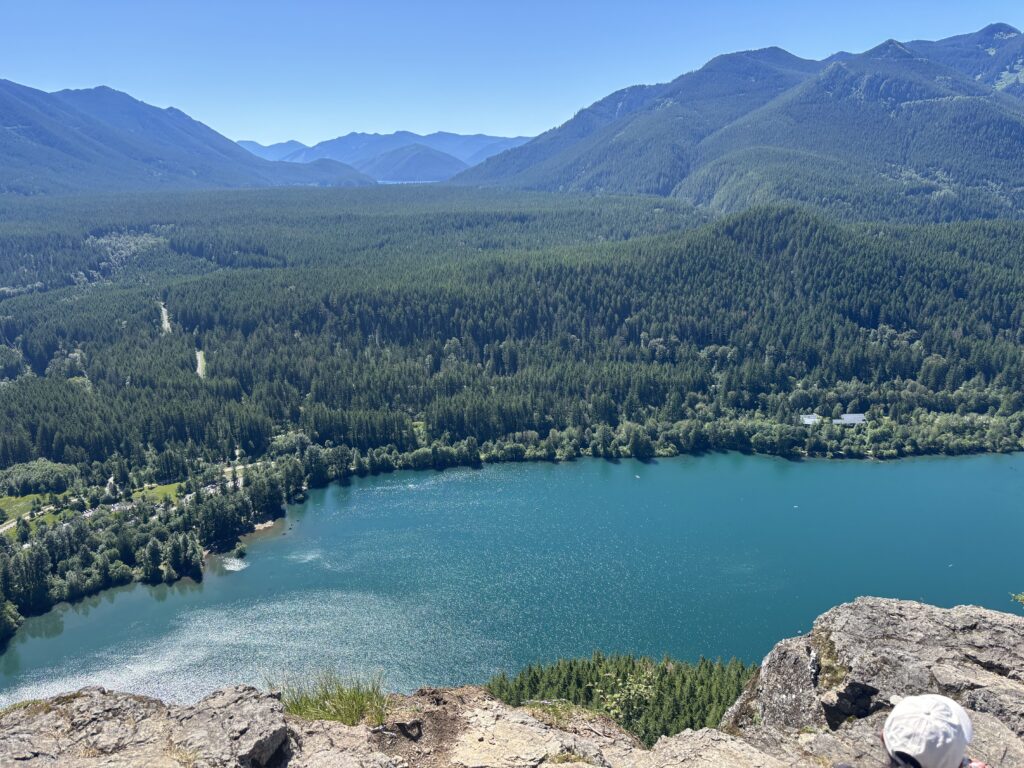
The Gateway Hike Everyone Should Do Once
Distance: 4 miles round trip Elevation gain: 1,100 ft Difficulty: Easy–Moderate Drive from Seattle: 35 minutes
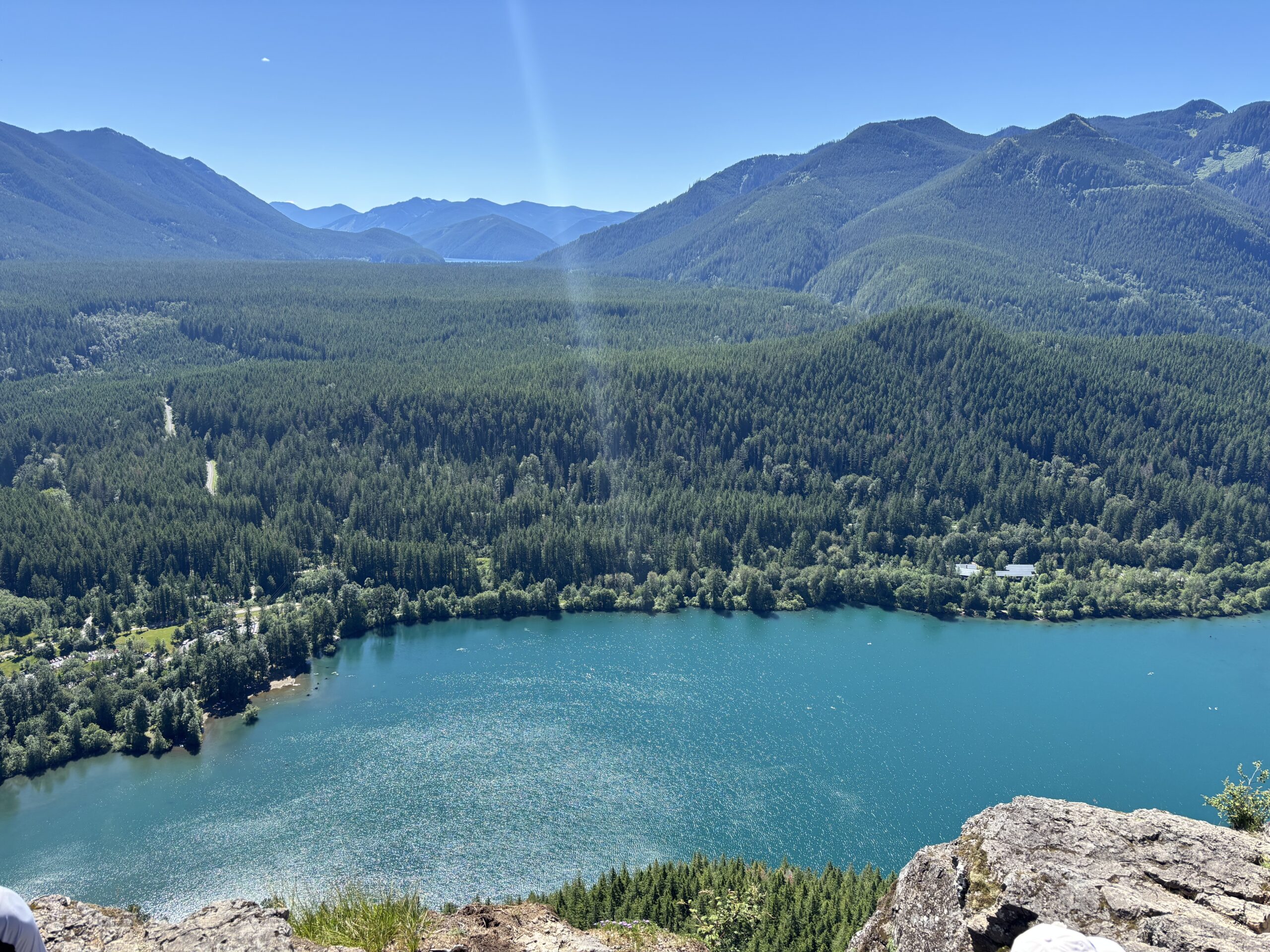
Rattlesnake Ledge is where Seattle hikers start. It’s the trail that gets people into hiking in the first place — accessible enough for beginners, rewarding enough for everyone else. The trail climbs steadily through second-growth forest before popping out at the ledge, where the view opens over Rattlesnake Lake and the Snoqualmie Valley below. On a clear day, moreover, the Cascades spread out in every direction.
It is, however, popular. Extremely popular. On a summer weekend, the parking lot fills before 8am and the ledge gets crowded by mid-morning. Therefore, go early, go on a weekday, or go in winter when the ledge gets a dusting of snow and the crowds thin dramatically. Winter Rattlesnake — cold, quiet, the lake steel-grey below — is honestly the better experience.
The trail itself is well-maintained and hard to get wrong. Nevertheless, the rocky ledge at the top requires care, especially when wet. In particular, keep children and dogs away from the edges. The drop is abrupt.
Best for: First-timers, families, anyone who wants a guaranteed view with minimal suffering Don’t miss: The lower ledge, five minutes below the main ledge, which most hikers skip and offers an equally good view with half the people
2. Franklin Falls — Snoqualmie Pass
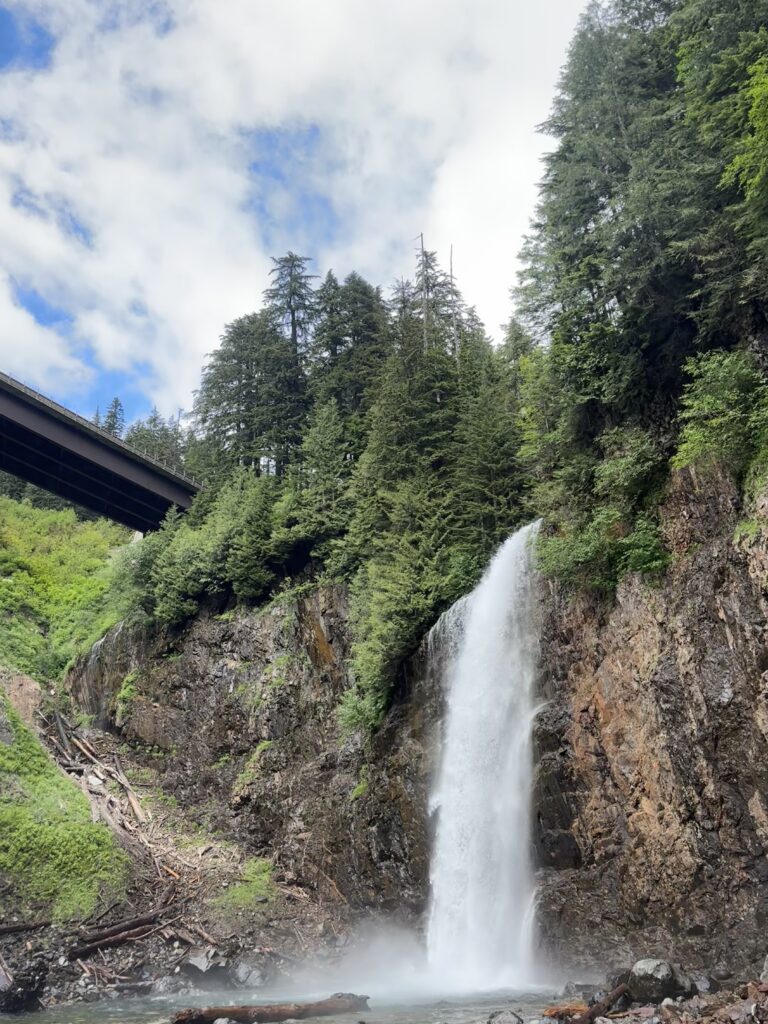
The Easiest Big Reward in the Cascades
Distance: 2 miles round trip Elevation gain: 400 ft Difficulty: Easy Drive from Seattle: 50 minutes
Franklin Falls is barely a hike. It is, however, one of the most spectacular payoffs per mile of trail in Washington. The path follows the South Fork Snoqualmie River through old-growth forest before arriving at a 70-foot waterfall that crashes into a pool with enough force to drench you if you stand too close. In late spring, when snowmelt runs hard, it is genuinely one of the most powerful natural sights within an hour of Seattle.
The trail is paved for most of its length and flat enough for strollers. As a result, it works for all fitness levels and all ages. In autumn, the surrounding trees turn and the forest glows. In winter, furthermore, the falls sometimes partially freeze into ice formations that feel entirely out of proportion with how easy it was to get there.
Go early in summer — the parking area is small and fills fast. Alternatively, the winter visit, when few people make the trip, is one of the quieter experiences on this list.
A trekking pole set seems like overkill for a trail this gentle. However, on wet roots and stream crossings — common throughout Washington trails regardless of difficulty — poles make a real difference to your stability and your knees. They fold down small enough to clip to a daypack. I use them on everything from Franklin Falls to Mount Rainier and they’ve consequently saved me from several undignified falls.
Best for: Families, non-hikers, anyone who wants nature without the fitness test Don’t miss: The alcove behind the falls if water levels allow — you can stand inside the rock face and look out through the cascade
3. Twin Falls — North Bend
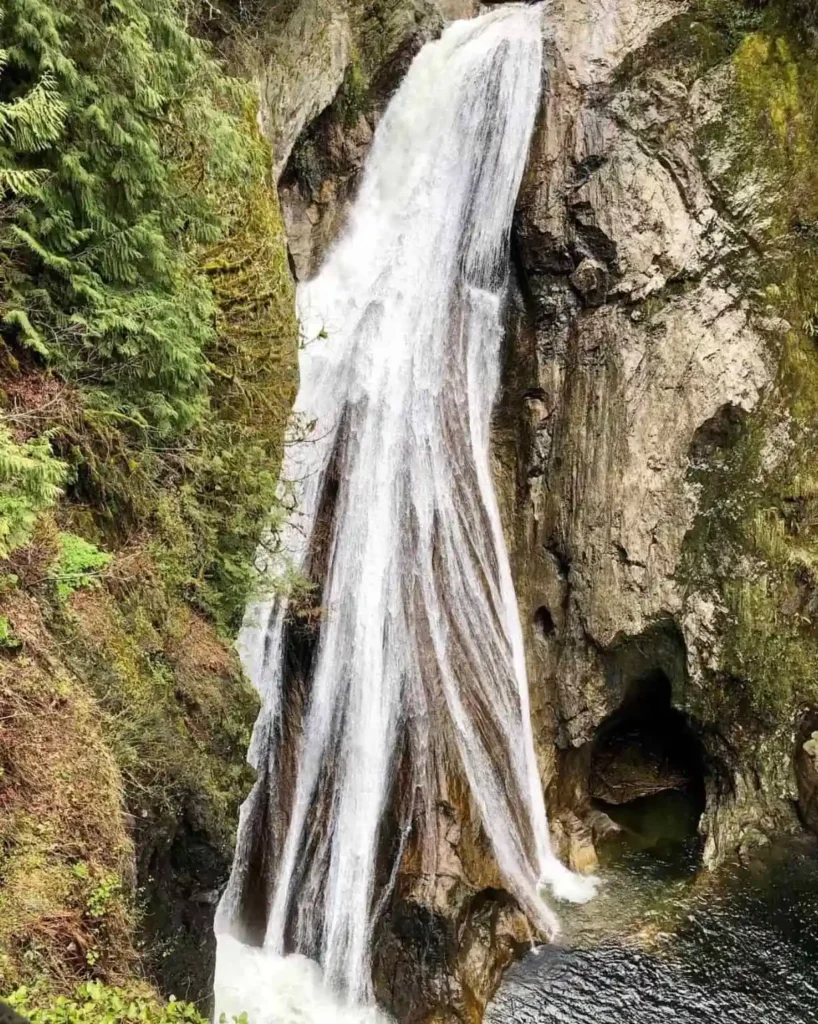
Old Growth, Two Waterfalls, and Nobody Tells You About It
Distance: 2.6 miles round trip Elevation gain: 500 ft Difficulty: Easy–Moderate Drive from Seattle: 35 minutes
Twin Falls sits minutes from Rattlesnake Ledge and yet receives a fraction of the attention. This is baffling, because it is the better trail. The path winds through one of the finest old-growth forest sections accessible from Seattle — massive Douglas firs and western red cedars several hundred years old, draped in moss, the kind of trees that make you feel appropriately small. The South Fork Snoqualmie River runs alongside most of the route before delivering two separate waterfalls in quick succession.
The upper falls, viewed from a wooden bridge suspended above the gorge, are the more dramatic of the two. The lower falls, by contrast, are quieter and easier to access. Together, they make for one of the most complete short hikes in the Cascades — forest, river, and waterfall in one compact package.
Furthermore, the trail is genuinely beautiful in every season. In winter, ice forms on the rocks around the lower falls. In spring, the river runs fast and loud. In autumn, the understory turns and the light through the canopy is extraordinary. Come any time.
Best for: Anyone who wants Rattlesnake Ledge without the crowd, forest lovers, photographers Don’t miss: Pause on the suspension bridge over the upper falls and look straight down into the gorge
4. Lake Serene — Index
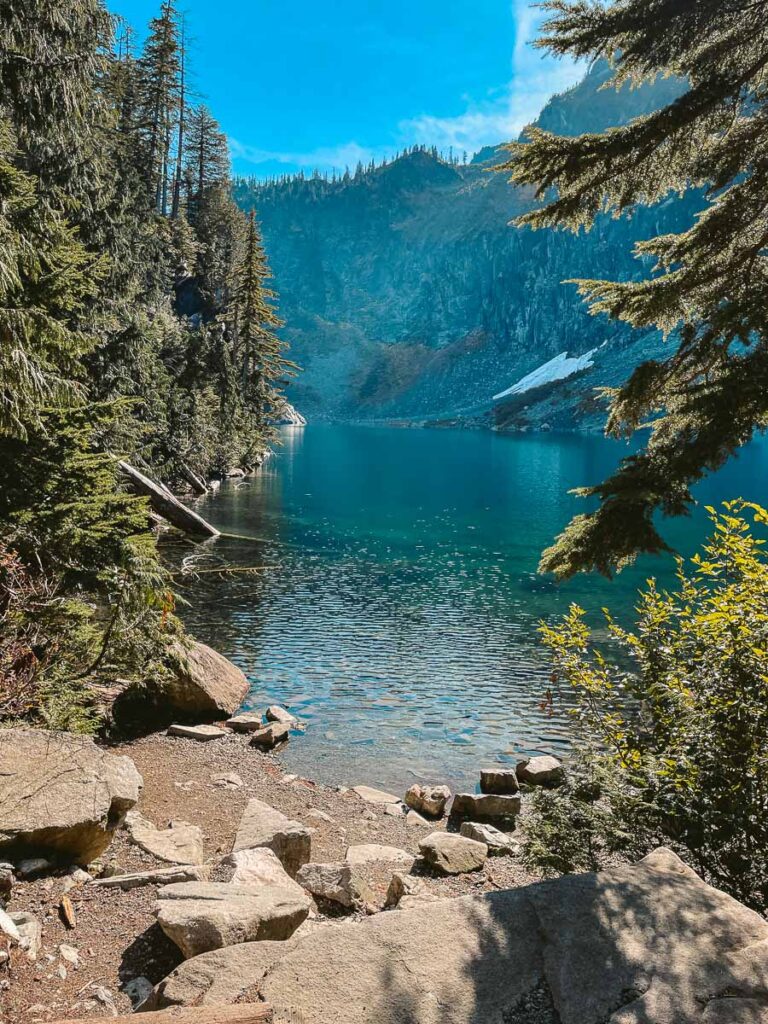
The Alpine Lake That Earns Every Step
Distance: 8 miles round trip Elevation gain: 2,600 ft Difficulty: Strenuous Drive from Seattle: 1 hour
Lake Serene is the hike that appears on every “best of Washington” list, and it earns the inclusion every time. The climb is relentless — 2,600 feet over four miles with little relief — but the destination justifies it completely. The lake sits in a glacial cirque below Mount Index, its water the deep turquoise-green of glacial melt, surrounded by rock walls that rise hundreds of feet on three sides. On a clear summer day, it is one of the most beautiful places I’ve stood in the Pacific Northwest.
The trail begins in forest and stays there for most of the climb before finally breaking into the open basin near the lake. Additionally, a short side trail leads to Bridal Veil Falls about a mile in — worth the five-minute detour on the way up. The upper section, moreover, involves some scrambling over boulders. It’s manageable, but requires using your hands in places.
Start early. The parking lot fills by 7am on summer weekends, and the climb in afternoon heat is genuinely unpleasant. Consequently, bring more water than you think you need. The lake looks swimmable and, on a hot August day, it is — cold enough to take your breath away, worth it entirely.
For a hike like this, a hydration bladder is the practical choice over water bottles. Hands-free drinking means you actually stay hydrated on a steep climb rather than stopping to fumble with a bottle every twenty minutes. Most fit a standard daypack perfectly. Fill it completely — 2 litres minimum for Lake Serene.
Best for: Fit hikers looking for a serious day out, alpine lake lovers Don’t miss: The boulder field at the lake’s edge for the best views back toward the valley
5. Snow Lake — Snoqualmie Pass
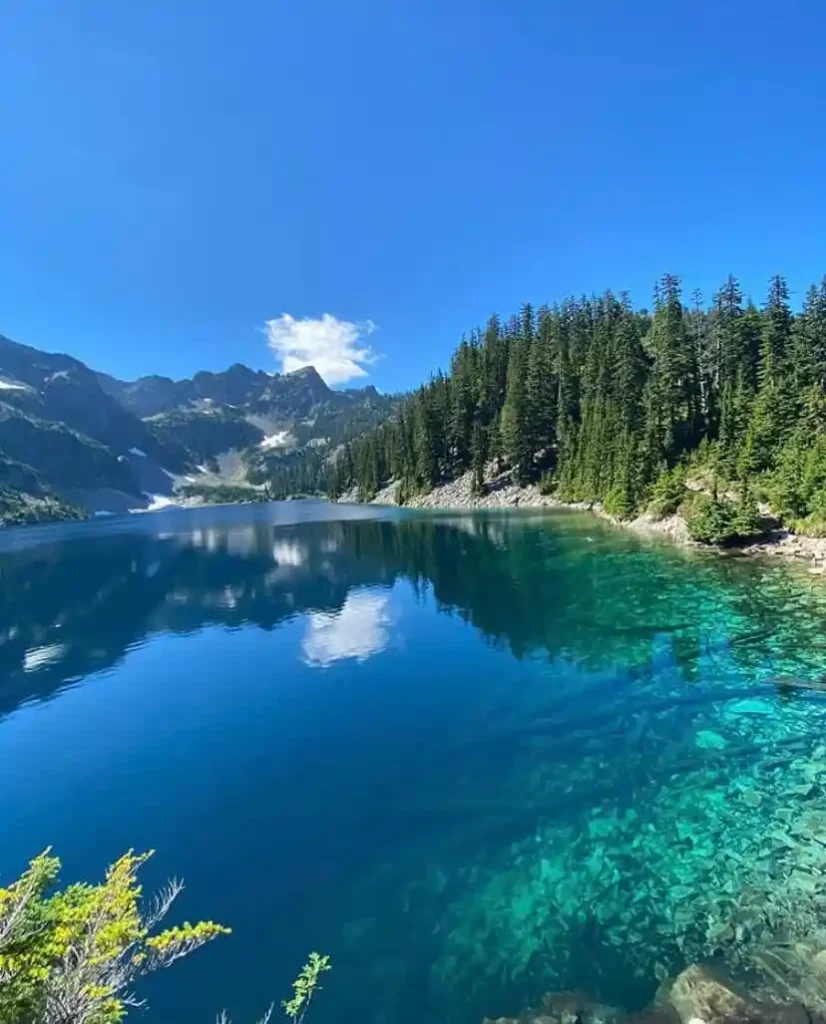
High Alpine, Low Effort (Relatively)
Distance: 7 miles round trip Elevation gain: 1,800 ft Difficulty: Moderate Drive from Seattle: 55 minutes
Snow Lake sits at 4,016 feet and feels like it should require more effort to reach than it does. The trail climbs through subalpine meadows and open ridge sections before descending to the lake — a large, blue-green alpine lake backed by rocky peaks and year-round snowfields. In July and August, furthermore, the wildflowers on the upper section are exceptional: lupine, paintbrush, and bistort in purple, red, and white across the open slopes.
This is the hike for people who want the alpine experience without the full commitment of Lake Serene. The elevation gain is real but the grade is manageable. Moreover, the views along the ridge before the descent are among the best on this list — you can see across to Mount Rainier on clear days, a sight that never loses its impact no matter how many times you’ve seen it.
The Northwest Forest Pass is required for parking. Get one in advance online — the $30 annual pass covers you at most trailheads across Washington and pays for itself after just two visits.
Best for: Intermediate hikers, wildflower season (July–August), anyone wanting alpine views without a permit lottery Don’t miss: The ridge section before the lake descent — stop, turn around, and look south toward Rainier
6. Mount Si — North Bend
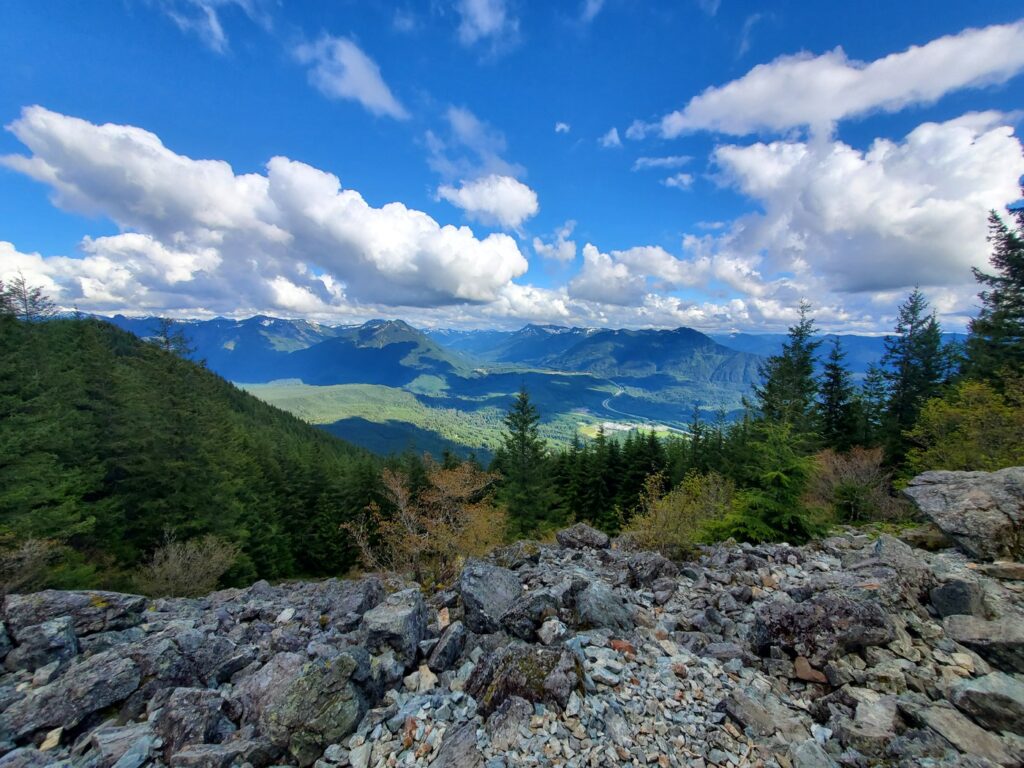
The Hardest Easy Hike Near Seattle
Distance: 8 miles round trip Elevation gain: 3,150 ft Difficulty: Strenuous Drive from Seattle: 40 minutes
Mount Si is Seattle’s training ground. Every weekend, thousands of people climb it. Many of them are preparing for bigger objectives — Rainier, the Olympics, longer Cascade routes. Others, meanwhile, are simply doing it because it’s there, it’s hard, and the views from the top are worth the suffering. Both are valid reasons.
The trail climbs relentlessly through forest for nearly four miles with almost no flat sections. It is, in short, a grind. Yet it’s also one of the most honest trails on this list — what you put in is exactly what you get out. The view from the summit haystack takes in the Snoqualmie Valley, the Olympics to the west, and on clear days the full sweep of the Cascades. It’s a genuinely earned panorama.
Go early to get parking. Bring trekking poles — the descent on tired legs over rocky trail is specifically where knees suffer. And bring snacks; the climb takes most people 3–4 hours round trip and your energy will flag on the way down.
For a high-output trail like Mount Si, an electrolyte tablet set dissolved in your water makes a real difference to how you feel in the final mile. Sweating hard over 3,000 feet of climbing depletes salts faster than plain water replaces them. The result, without replenishment, is a specific heavy-legged feeling that ruins the last hour of an otherwise good day. Consequently, one tablet per litre on a long climb is a habit worth starting immediately.
Best for: Fitness hikers, people training for bigger peaks, anyone who likes a clear sense of accomplishment Don’t miss:The scramble up to the haystack above the main summit — the additional 100 feet adds significantly to the view
7. Skyline Divide — Mount Baker
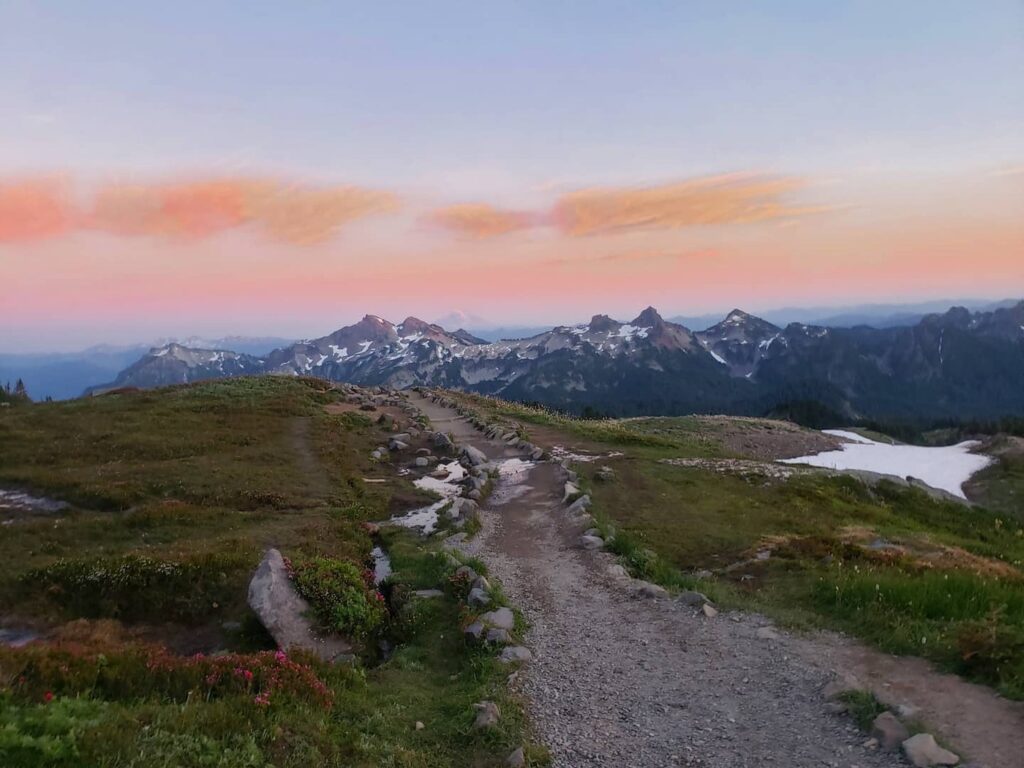
The Most Spectacular Ridge Walk in Washington
Distance: 7 miles round trip Elevation gain: 2,100 ft Difficulty: Moderate–Strenuous Drive from Seattle: 2 hours
Skyline Divide is the furthest from Seattle on this list and the one I’d drive twice as far to do again. The trail climbs through forest before emerging onto an open ridge at 5,500 feet with views that are, without exaggeration, some of the best in the Pacific Northwest. Mount Baker fills the entire eastern horizon — a glaciated stratovolcano so close and so massive that it dominates everything. To the west, furthermore, the San Juan Islands spread across the Salish Sea.
The ridge walk itself — nearly two miles of open alpine terrain with the mountain beside you the entire time — is the reason to come. In July, the meadows bloom with every wildflower the Pacific Northwest produces. In August, moreover, the blueberries are ripe and cover the trailside for hundreds of metres. I ate blueberries the entire way back and considered it a successful hiking strategy.
The drive is the commitment. Two hours from Seattle means an early start is essential — leave by 5:30am for a comfortable day with time to linger on the ridge. Pack a full lunch. You won’t want to rush.
For a day this long, a lightweight daypack with hip belt distributes weight off your shoulders and onto your hips, where your body carries loads far more efficiently. The difference over 7 miles and 2,100 feet of gain is significant — particularly on the drive home, when your shoulders are either grateful or not. Look for 20–25 litres — enough for layers, food, water, and a first aid kit without becoming a burden itself.
Best for: Experienced hikers, wildflower season (July–August), anyone willing to drive for something genuinely exceptional Don’t miss: Walk the full ridge to the end — the view improves with every hundred metres
Before You Go: Practical Notes for All These Trails
The Northwest Forest Pass: This is required for parking at most trailheads on this list. At $30 for an annual pass, it covers nearly every federal trailhead in Washington. Buy it online at recreation.gov before you go — rangers ticket actively on weekends.
Trail conditions: Washington trails are seasonal. Many of the higher elevation hikes — Snow Lake, Skyline Divide, Lake Serene — are snow-covered until late June or early July. Therefore, always check current conditions at wta.org (Washington Trails Association) before heading out. The trip reports there are written by recent hikers and are consequently more reliable than any fixed guide.
Wildlife: Black bears are present throughout the Cascades and Olympics. They are generally avoidant of people. Nevertheless, carry bear spray on longer hikes and know how to use it. On day hikes, making noise on the trail — talking, clapping on blind corners — is sufficient and sensible.
Layers: Washington weather changes fast at elevation. Even on a warm Seattle morning, temperatures on a ridge at 5,000 feet can be twenty degrees colder with wind. Therefore, pack a mid-layer regardless of the forecast. Your waterproof jacket counts as one layer, but it shouldn’t be the only one.
Leave No Trace: Washington’s most popular trails are under significant pressure from visitor numbers. As a result, stay on the trail, pack out everything you pack in, and don’t pick the wildflowers. The trails on this list are extraordinary precisely because people have treated them that way. Keep it that way.
The Honest Summary
Washington is one of the finest hiking states in America. That becomes obvious the first time you stand on a Cascade ridge and watch the clouds move through the peaks below you. The trails on this list represent different versions of that experience: easy and waterfall-soaked, moderate and meadow-lined, strenuous and summit-rewarded.
Start with Rattlesnake if you’re new to the region. Then work toward Lake Serene as your fitness builds. After that, drive north to Skyline Divide on a clear July morning and stand on that ridge with Mount Baker beside you. You’ll understand completely, at that point, why people move to the Pacific Northwest and never leave.
Bring the jacket. Check the conditions. Go early.
The mountains will do the rest.
Article by Just a Lion · July 2026