One Week in Mexico: Pyramids, Tacos, and a City That Will Completely Overwhelm You (Lovingly)
Mexico · 7 days · Mexico City, Teotihuacán & Beyond
Mexico City is too big to understand and too good to stop trying.
Twenty-two million people. Hundreds of neighborhoods. One of the greatest food cities on earth. Pre-Columbian ruins inside the city limits. Lucha libre on Friday nights. Frida Kahlo’s blue house. Some of the best museums in the Americas. Taco stands operating since 5am that have a longer queue at 7am than most restaurants do on a Saturday night.
And then, an hour north by road, one of the most extraordinary archaeological sites in the world — Teotihuacán, the City of the Gods, where pyramids built two thousand years ago still dwarf everything around them and where the scale of what humans built without machines or wheels still defies easy comprehension.
I had seven days. I used every one of them.
How I Structured the Week
- Day 1: Arrive Mexico City — Condesa, Roma Norte, first tacos
- Day 2: Historic Centro and Tlatelolco
- Day 3: Teotihuacán (full day)
- Day 4: Coyoacán and Xochimilco
- Day 5: Polanco, Chapultepec, and MUNAL
- Day 6: Day trip to Puebla
- Day 7: Slow morning in Roma Norte, afternoon flight
Getting In
Mexico City’s Benito Juárez International Airport (AICM) is enormous, chaotic, and a study in managed confusion. The authorized taxi stands inside the terminal are the correct option — buy a ticket before you exit and a driver will take you to your destination at a fixed price. Do not accept offers from people approaching you inside the terminal. The Metro exists and is extremely cheap but with luggage and jet lag it’s not the right first move.
A new airport (Felipe Ángeles, AIFA) opened north of the city in 2022 and serves some international routes — check which airport your flight uses, as they’re not interchangeable.
Where I Stayed
Ignacia Guest House (Roma Norte) — Where I spent the first four nights and the best accommodation decision of the trip. A beautifully restored 1913 mansion with nine rooms arranged around a central garden and a common area that functions as a genuine living room — books, mezcal on the bar, other travelers you actually want to talk to. The neighborhood outside the door is one of the best in the city: tree-lined streets, independent coffee shops, excellent restaurants in every direction. Book early; it fills up.
Hotel Carlota (Cuauhtémoc) — Two nights in a design hotel with an excellent rooftop pool and a more central location for the Polanco and Chapultepec days. Sleek, contemporary, impeccably run. The breakfast spread is one of the best I had in Mexico.
What I’d skip: The big chain hotels around the Zócalo are well-located for the Historic Centre but the area empties after dark and feels disconnected from the parts of the city worth spending time in. Roma Norte, Condesa, and Polanco are where the city lives.
Where I Ate
Mexico City is, without exaggeration, one of the top five food cities in the world. This is not a controversial claim among people who’ve been. The depth of the cuisine — the regional variation, the centuries of technique, the sheer number of exceptional places to eat at every price point — is staggering.
Tacos al pastor from El Huequito (Centro Histórico) — Operating since 1959, widely considered the originator of tacos al pastor in Mexico City. The trompo (vertical spit of marinated pork with pineapple) rotates behind the counter. The tacos cost around 25 pesos each. I had four and stood on the pavement eating them and felt completely correct about everything.
Contramar (Roma Norte) — The legendary seafood restaurant. Reservations essential, weeks in advance. The tuna tostadas are the dish everyone talks about — raw tuna on a crispy tortilla with chipotle and avocado — and they deserve every word written about them. The pescado a la talla (grilled fish painted half with red chile sauce and half with green) is the theatrical centrepiece. Go for lunch; the room at midday with Mexican families celebrating things is the right atmosphere.
Pujol (Polanco) — Enrique Olvera’s flagship and one of the best restaurants in the world. The mole madre — a mole that has been continuously cooking and replenishing for years — is served alongside a freshly made mole and you eat them together, the ancient and the new. The corn tasting menu traces the ingredient through its entire history. It is expensive, it is worth it, and it requires booking weeks to months ahead.
Mercado de Medellín (Roma Norte, yes — same name, different country) — My local market for morning and lunchtime eating. Fresh juices, gorditas, tamales, tlayudas, soups. The kind of place where regulars have their seat and the vendors know their order. Cheap, excellent, and completely unlisted in most travel guides.
Expendio de Maíz (Roma Norte) — A tiny restaurant with no fixed menu serving traditional Mexican dishes built around native corn varieties. The kitchen is open, the cooking is visible, and the food is some of the most deeply flavored I encountered. Cash only, always full, worth the wait.
El Vilsito — A car mechanic by day, taco stand by night. This is not a gimmick — the mechanics go home, the trompo comes out, and one of the best late-night taco operations in the city sets up in the garage. Go after 10pm. Order tacos al pastor and a Modelo and stand in the petrol-scented air and be very happy.
Mezcal at any hour: Roma Norte and Condesa have a dozen excellent mezcalerías. Bósforo in the Centro is the most atmospheric — a tiny, dark bar with an extraordinary mezcal list and a bartender who will guide you through regions and agave varieties if you ask. Mezcal is not tequila; approach it with curiosity rather than shots.
What I’d skip: Tourist-facing restaurants around the Zócalo with rooftop views and English-first menus. The view is real; the food is not the point of being in Mexico City. Anywhere with a photograph of a burrito on the menu — the burrito is a northern Mexican and Tex-Mex form; Mexico City doesn’t do them and the places that do are aimed purely at tourists.
Teotihuacán: The Full Guide
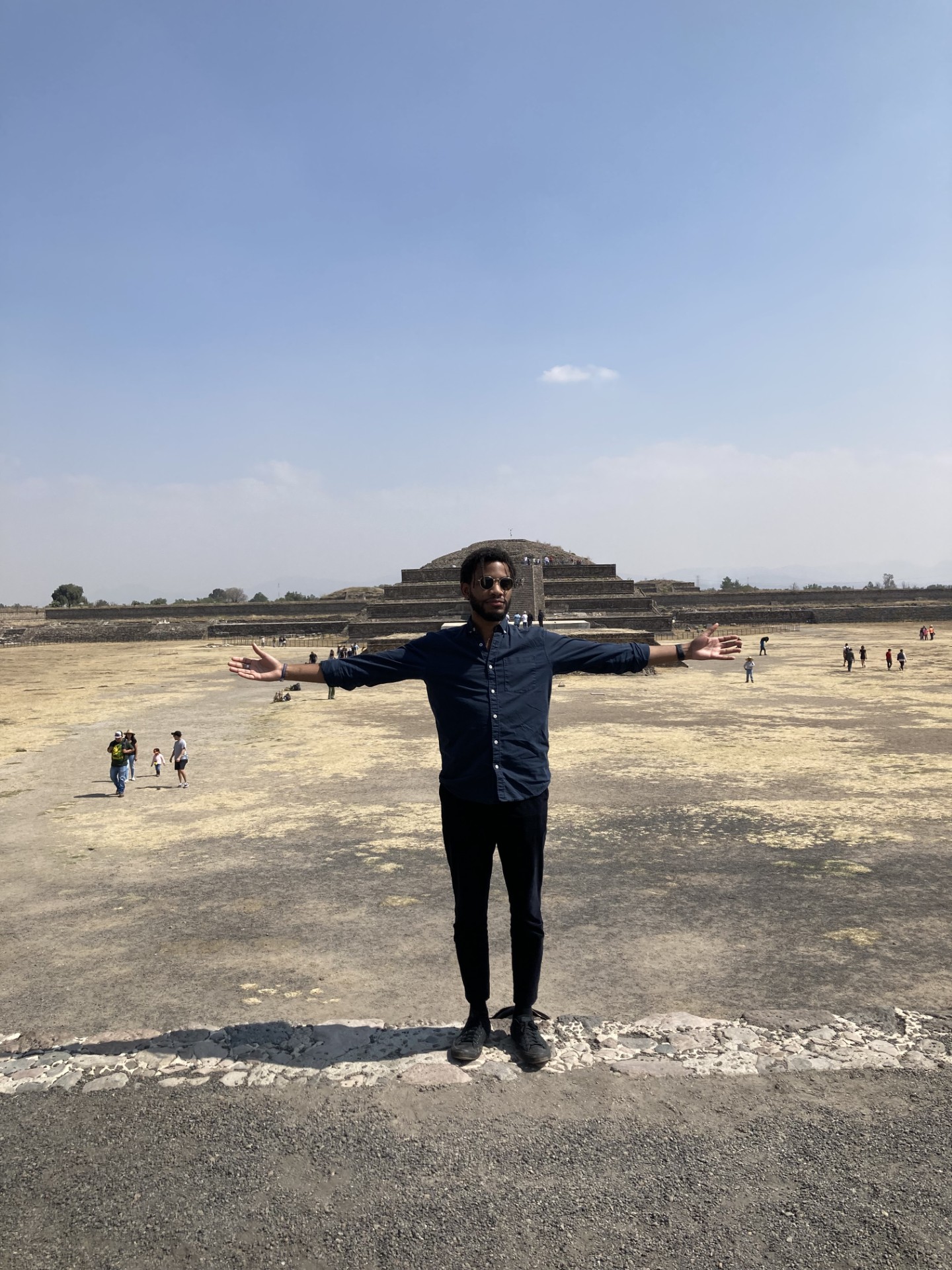
An hour north of Mexico City by road, Teotihuacán is one of the most significant archaeological sites in the Americas and one of the most extraordinary places I’ve stood in my life. At its peak around 450 AD it was one of the largest cities in the world — home to perhaps 200,000 people, with architecture that aligned to astronomical events and a civic scale that still astonishes.
Getting there: Take a bus from Terminal Central del Norte (the northern bus terminal, accessible by Metro). Autobuses del Norte runs services every 30 minutes, the journey takes about an hour, and it costs around 70 pesos each way. This is better than an organized tour because you control your own timing — and timing at Teotihuacán matters enormously.
Arrive when the gates open (9am). By 11am the main avenue is crowded. By 1pm it’s very crowded and the sun is punishing. Go early, stay for three or four hours, leave before the worst of it.
The Pyramid of the Sun: The third largest pyramid in the world. You can climb it — 248 steps, steep enough to require using your hands on sections, absolutely worth every step. From the top you see the full layout of the ancient city spread below you, the Avenue of the Dead running south, the Pyramid of the Moon beyond. It takes your breath away in the most literal sense, partly the climb and partly what you’re looking at.
The Pyramid of the Moon: Slightly smaller, at the northern end of the Avenue of the Dead. The view back down the avenue from here is the one on every photograph of the site — but in person, with the scale of the Pyramid of the Sun to your right, it’s incomparably more affecting than any image.
The Avenue of the Dead: The two-kilometre central avenue connecting the major pyramids. Walk the entire length. The smaller platforms and temple complexes on either side are less visited and give you a sense of the residential and commercial life that once operated here, away from the ceremonial centres.
The Temple of the Feathered Serpent (Quetzalcóatl): In the Ciudadela complex at the southern end of the site. Often skipped by visitors who run out of energy after the main pyramids — don’t skip it. The carved feathered serpent heads along the facade are some of the finest stone carving at the site.
Practical notes for Teotihuacán:
- Wear serious sunscreen and a hat. The site has almost no shade and the altitude (2,300 metres) intensifies UV.
- Bring water. There are vendors but prices are high and sustainability questionable.
- Comfortable shoes with grip — the pyramid steps are steep and the stones uneven.
- The vendors selling obsidian figurines and carved jaguar masks outside the main entrance are persistent. A firm but friendly no gracias works; engaging with pricing will cost you twenty minutes.
- Budget a full day — four to five hours at the site plus travel time from Mexico City.
Coyoacán: Frida, Markets, and the City’s Quietest Afternoon
Coyoacán is a neighborhood in the south of the city that feels like a separate colonial town — cobblestone streets, a central plaza with a fountain, weekend markets, and the Casa Azul: Frida Kahlo’s famous blue house, now the Museo Frida Kahlo.
Museo Frida Kahlo: Book tickets online weeks in advance — they sell out completely. The museum is Frida’s actual home, left largely as it was at her death in 1954. Her painting studio, her bed (with the mirror above it that she used to paint herself), her traditional Tehuana dresses, her wheelchair, Diego Rivera’s presence in every corner. Even if you arrive without strong feelings about Kahlo’s work, the life that the space reveals is extraordinary.
Mercado de Coyoacán: The covered market adjacent to the main plaza. The tostadas de tinga stall — shredded chicken on a crispy tortilla with chipotle — had a queue of locals that I joined without hesitation and ate in about 90 seconds standing at a counter. Around 40 pesos.
Xochimilco: Take a trajinera (flat-bottomed boat) through the ancient canal system south of Coyoacán. On weekends it’s festive, loud, full of families drinking and mariachi bands paddling between boats playing for tips. On a weekday morning it’s peaceful and the canals and floating gardens (chinampas) give you a glimpse of how much of the Valley of Mexico was once a lake. Go on a Saturday for the party; go on a Tuesday for the reflection.
Puebla: Worth the Two-Hour Bus Ride
Puebla is two hours southeast of Mexico City by bus from TAPO (the eastern terminal). It is one of the best-preserved colonial cities in Mexico, a UNESCO World Heritage site, and the birthplace of two of Mexico’s most important dishes: mole poblano and chiles en nogada.
The Cathedral: One of the most imposing baroque structures in the Americas. The interior takes twenty minutes to absorb properly.
Barrio del Artista: A neighborhood of artists’ studios and covered walkways, quiet and lovely on a weekday.
Eating in Puebla: Go to a traditional restaurant and order mole poblano — the chocolate-chile sauce served over turkey or chicken that takes days to prepare and contains somewhere between 20 and 40 ingredients depending on who’s making it. In season (August–September), chiles en nogada is the unmissable dish: green poblano chiles stuffed with a sweet-savory meat filling, covered in walnut cream sauce and pomegranate seeds — the colours of the Mexican flag, intentionally.
I’d give Puebla a full day and return for a night if your schedule allows.
Practical Notes
Getting around Mexico City: The Metro is one of the world’s great urban transit systems — cheap (7 pesos flat fare), extensive, and efficient outside rush hour. Use it. Uber and DiDi work reliably for longer distances or late nights. Avoid unmarked taxis.
Safety: Mexico City’s reputation is worse than its reality in the neighborhoods visitors frequent — Roma, Condesa, Polanco, Coyoacán, and the Historic Centre are all safe with standard urban awareness. Don’t walk around with your phone out unnecessarily, be aware late at night in unfamiliar areas, and use registered apps rather than street taxis. As with Medellín — common sense goes a long way.
Altitude: Mexico City sits at 2,240 metres. Some visitors feel the altitude — headaches, breathlessness, tiredness — particularly in the first 24 hours. Drink more water than you think you need, take the first day gently, and avoid heavy drinking on arrival night.
Language: Spanish is essential outside tourist-facing businesses. Mexican Spanish is clear and relatively easy to follow; making any effort is enormously appreciated.
Budget: Mexico City is remarkable value. Street tacos: 20–40 pesos each. A full market lunch: 80–150 pesos. A mid-range restaurant dinner with drinks: 400–700 pesos per person. A serious restaurant like Contramar: 1,000–1,500 pesos per person. Budget around 1,500–2,000 pesos per day (roughly £60–80) for a comfortable week with one or two splurges.
When to go: October and November are ideal — post-rainy season, the city is green and clear, temperatures are perfect, and Día de los Muertos (November 1–2) is one of the most moving and extraordinary things you can witness in Mexico. March through May before the rains are also excellent.
The Honest Summary
Mexico City will exhaust you and refuse to apologize for it. It is too much of everything — too big, too loud, too layered, too historically dense, too culinarily overwhelming. You will not see enough in a week. You will not eat enough in a week. You will end the trip with a list of places you didn’t get to that is longer than the list of places you did.
And then you’ll get to Teotihuacán, and stand on top of a pyramid built two thousand years ago while the sun moves across a sky that hasn’t changed, and the city and its noise will feel very far away, and you’ll understand why people have been making this journey for centuries.
Go hungry. Go curious. Go with comfortable shoes and a willingness to be completely undone.
Mexico will handle the rest.
Article by Just a Lion · October 2024