Tokyo in Seven Days: The City That Broke My Brain (In the Best Way)

I need to tell you something before we start: Tokyo will ruin other cities for you.
Not in an arrogant, “nothing compares” way. In a quieter, more insidious way — you’ll come home and notice things. How nobody picks up litter here. How the trains are never quite on time. How the ramen is never quite right. How the convenience stores somehow feel like a step down from a FamilyMart in Shinjuku.
Tokyo is the most competently run city I’ve ever visited. It is also one of the strangest, most layered, most surprising. After seven days I understood perhaps 3% of it and I cannot wait to go back for the other 97.
Here’s everything I learned.
How to Think About Seven Days in Tokyo
Tokyo is not one city. It’s closer to 15 neighborhoods that happen to share a train network, each with its own personality, its own food scene, its own reason to exist. Seven days is enough to start understanding it — not enough to exhaust it.
My structure:
- Days 1–2: East Tokyo — Asakusa, Ueno, Yanaka
- Days 3–4: Central — Shinjuku, Harajuku, Shibuya
- Days 5–6: West and South — Shimokitazawa, Daikanyama, Nakameguro
- Day 7: Slow day — Yanesen area, a long lunch, a department store food hall, airport
Getting There & Into the City
Fly into Narita or Haneda. Haneda is closer (30–40 minutes to central Tokyo by train), easier to navigate, and preferable if you have the choice. Narita is the bigger international hub and adds 30–45 minutes to your journey but it’s very manageable.
Buy a Suica card at the airport (a rechargeable IC card that works on essentially every train, subway, and bus in Japan, and also at convenience stores and many vending machines). This is the single most useful thing you will do in Japan. Load ¥3,000–¥5,000 on it and top it up as needed.
Visa: Many nationalities (UK, EU, US, Australian) get 90 days visa-free. Check current requirements — Japan briefly tightened entry processes post-Covid and policies can shift.
Where I Stayed
Trunk Hotel (Shibuya) — A design hotel that genuinely lives up to its aesthetic ambitions. Thoughtfully designed rooms, excellent cocktail bar, in the heart of one of the most interesting parts of the city. Mid-to-upper range pricing. The neighborhood buzz outside the door is part of what you’re paying for.
Ryokan Sawanoya (Yanaka) — For three nights I stayed in a small traditional inn in the Yanaka neighborhood. Tatami floors, a futon laid out each evening, yukata provided, shared baths. Mrs. Sawa runs it with her family and has been welcoming foreign guests for decades — there’s a guestbook going back to the 1980s that you will read for far too long. Affordable, memorable, and an entirely different experience from any hotel.
What I’d skip: The enormous business hotels around Tokyo Station are fine and hyper-convenient but characterless. You don’t come to Tokyo to stay somewhere that could be in Frankfurt.
Where I Ate
This section could be 10,000 words and still feel incomplete. Tokyo has more Michelin stars than any city on earth and the food culture runs from three-star temples of kaiseki cuisine down to a perfect bowl of ramen eaten standing up at a counter at midnight. Both ends are worth your time.
Ramen: Go to a dedicated ramen shop, not a restaurant that also serves ramen. I found a tonkotsu place in Shinjuku that had a ticket machine at the door, eight seats at a counter, and a bowl of pork broth so rich it felt structural. ¥900. I went back three times.
Sushi: If you’re going to splurge once, make it sushi. Book ahead at a mid-range counter restaurant in Ginza or Tsukiji outer market area. I paid around ¥8,000 for an omakase lunch at a counter with 10 seats — the chef placed each piece directly on the wooden bar in front of me, told me its origin, and watched to make sure I ate it immediately. It was perfect.
Depachika: The basement food halls of Tokyo’s department stores are one of the great food experiences on earth. Isetan in Shinjuku and Mitsukoshi in Ginza are the two best. Go hungry, graze on samples, buy beautiful prepared foods for a picnic. Budget an hour and emerge dazed.
Izakaya: A Japanese pub-restaurant — you order small dishes over an extended evening with drinks. Find a local one (look for the ones that require you to duck under a noren curtain, with a handwritten menu, smoky and warm). Order yakitori, karaage, edamame, cold tofu with ginger, and more yakitori. This is how Tokyo eats on a Tuesday night.
Convenience stores (seriously): 7-Eleven, FamilyMart, and Lawson in Japan are not comparable to their equivalents anywhere else. The onigiri (rice balls), the egg salad sandwiches, the nikuman (steamed buns), the instant ramen you eat on a plastic stool — all of it is genuinely good. I ate at least one convenience store meal per day and regret nothing.
What I’d skip: Tourist-facing sushi conveyor belts near Shibuya crossing are fine but you can do much better for similar money. Anything with an English menu posted outside and photographs of the food — apply the same rule as in Lisbon.
What to Do: Honest Assessments
Senso-ji Temple (Asakusa): The most visited temple in Japan. It is beautiful and it is crowded. Go before 7am and you’ll have it largely to yourself in the mist with the lanterns still lit. After 10am it’s a tourist market with a temple attached. Both are valid experiences; know which you’re after.
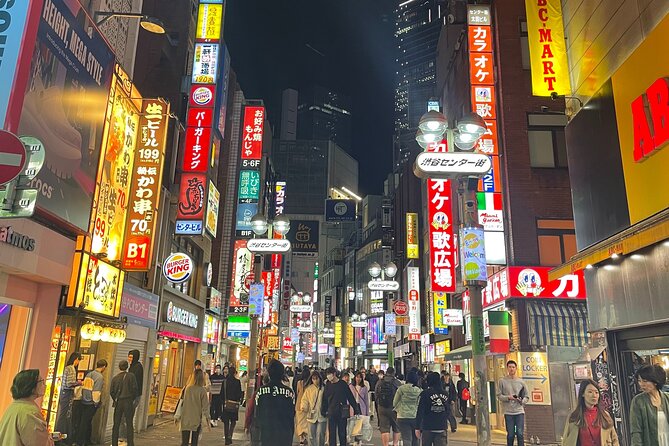
Shinjuku at night: Go on a Friday or Saturday evening. Start in Golden Gai — a tiny alley system of bars so small some hold six people — and work your way through. Each bar has a different character, different music, different eccentric owner who will either adopt you for the evening or politely indicate this is a regulars-only spot. Kabukicho, the entertainment district just north, is loud and neon and worth walking through once for the sensory assault.
Shibuya Crossing: You’ve seen the photos. In person it’s even more overwhelming — the scale, the synchronization, the sheer number of humans moving in every direction at once. Watch it from the Starbucks overlooking it (take a coffee, take the window seat, watch for twenty minutes). Then walk through it yourself. Then eat nearby.
Harajuku & Omotesando: Harajuku’s Takeshita Street is teenage fashion chaos — loud, colorful, worth fifteen minutes of your time. Five minutes away, Omotesando is the opposite: a wide, tree-lined boulevard of beautiful architecture and high-end stores. The Omotesando Hills building by Tadao Ando is worth going inside even if you can’t afford anything in it.
Yanaka: My favorite neighborhood in Tokyo. It largely survived the Second World War bombing and the subsequent redevelopment, which means it looks like Tokyo used to look — low wooden buildings, small temples, a cemetery you can walk through peacefully, a covered shopping street with old shops selling things people actually need. I spent an entire afternoon here without a plan and it was the best afternoon of the trip.
TeamLab Planets (Toyosu): I was skeptical of the immersive digital art trend. This converted me. Walk barefoot through rooms where the floor is shallow water reflecting infinite light patterns, stand in a room that appears to be full of floating flowers, lose your sense of scale completely. It’s genuinely moving in a way I didn’t expect. Book well in advance — it sells out weeks ahead.
Tsukiji Outer Market: The famous tuna auction moved to Toyosu, but the outer market remains and is one of the best food experiences in the city. Go for breakfast — fresh uni (sea urchin) on rice, grilled scallops, tamagoyaki (egg roll), the freshest tuna sashimi you’ll ever eat. Go hungry. Go early.
What I’d skip: Tokyo Tower is a perfectly nice view but the Skytree does it better and taller. Akihabara is fascinating for about 45 minutes and then I found it numbing — your mileage may vary. Disneyland Tokyo is great but it’s Disneyland; give that day to the city instead.
Understanding the Transport
Tokyo’s train network looks terrifying on a map and is completely intuitive in practice after about 48 hours. The Suica card works everywhere. Google Maps gives reliable train directions including platform numbers and exact minute counts. When in doubt, follow everyone else — they know where they’re going.
The trains run until roughly midnight and start again around 5am. After midnight, taxis are your option — they’re metered, reliable, and more expensive. Plan your evenings accordingly.
Practical Notes
Cash: Japan is cash-heavy by global standards, though this has improved substantially. Have ¥10,000–¥20,000 in cash at all times. 7-Eleven ATMs reliably accept foreign cards.
Language: English signage is improving rapidly in Tokyo but spoken English is limited outside tourist areas. Download Google Translate and use the camera function — it translates menus and signs in real time and it’s remarkable. Learn arigatou gozaimasu (thank you), sumimasen (excuse me), and pointing works fine everywhere else.
Etiquette: Eat while walking — considered impolite (exceptions: food from market stalls in specific places). Talk loudly on the train — don’t. Eat your ramen noisily — please do, it’s correct. Remove shoes when indicated — always. Queue for everything — everyone does, it works, it’s wonderful.
Budget: Tokyo is more affordable than its reputation suggests if you eat like the locals. Ramen or a convenience store lunch: ¥700–¥1,200. Mid-range dinner: ¥2,000–¥4,000. Splurge omakase: ¥8,000–¥15,000. The train network means you never need expensive taxis. Budget ¥15,000–¥20,000/day (roughly £75–£100) for a comfortable trip.
The Honest Summary
Tokyo is one of those cities that requires you to let go of your existing framework for how cities work. The streets have no names (addresses work on a different system). The neighborhoods shift character every few blocks. The quietest street can contain the most extraordinary bowl of noodles behind an unmarked door. The city will not perform itself for you — you have to go looking.
Seven days gave me a foundation. It gave me favorite corners and a ramen shop I feel ownership over and a small bar in Golden Gai run by a woman who played American jazz records and spoke no English but communicated entirely through expression and bottle-pointing. It gave me, on my last morning, a perfect bowl of miso soup eaten alone at a counter while light came through the window and nobody was in any hurry at all.
I’ve been back twice since. I’ll keep going back.
Article by Just a Lion · November 2024