Paris in Seven Days: An Honest Guide for People Who’ve Already Been Once
Paris has a reputation problem — in two opposite directions.
Half the world romanticizes it to an impossible degree: the city of light, of love, of croissants eaten while gazing at the Eiffel Tower. The other half has turned Paris-skepticism into a personality trait: it’s dirty, the waiters are rude, it smells like cigarettes, it’s all tourists anyway.
Both camps are wrong, and neither is much help if you’re trying to figure out what to actually do with seven days there.
I’ve been to Paris more times than I can remember. I was nervous writing this piece because “Paris travel guide” is perhaps the most crowded genre in travel writing. So I decided to write the guide I wish I’d had before my first few visits: the one that tells you what’s genuinely worth your time, what’s been coasting on reputation for years, where to actually eat, and what the city feels like when you stop performing amazement at it and just live in it for a week.
A Different Way to Think About the Week
Most Paris guides organize by arrondissement or by attraction type. I’d suggest organizing by pace and intention instead:
Days 1–2: Get your bearings. Walk more than you plan. Get lost on purpose.
Days 3–5: Go deeper. Pick two or three neighborhoods and learn them rather than ticking off monuments.
Days 6–7: Slow down completely. Sit in a café for two hours. Visit one small museum no one told you to visit. Buy something at a market. Feel the city rather than consume it.
Where I Stayed
Le Pavillon de la Reine (Le Marais, 3rd) — An extraordinary small hotel in a 17th-century mansion on Place des Vosges. The interior courtyard is one of Paris’s secret pleasures. It’s expensive but genuinely special — quiet despite being central, with a proper bar that serves excellent martinis. A treat for a special occasion, or if accommodation is where you choose to splurge.
Hôtel du Petit Moulin (Le Marais, 3rd) — Same neighborhood, half the price, equally charming. Each room is individually designed by Christian Lacroix in bold, somewhat overwhelming ways. Mine was peacock blue and gold. It shouldn’t work; it absolutely did.
What I avoided and why: The major chain hotels around the Opéra and the 8th feel like airports with beds. The tourist-heavy short-term rentals in Saint-Germain often come with thin walls and noise complaints. Le Marais remains my preferred base — central, walkable to most of the city, and genuinely Parisian in feel.
Where I Ate
Paris has an enormous number of mediocre restaurants that trade on the city’s culinary reputation. Avoiding them requires some effort; the results are worth it.
Septime (11th) — One of the most talked-about restaurants in Paris, and it deserves the talk. The tasting menu changes constantly, leans on exceptional French produce, and the room feels genuinely lived-in rather than designed. Book weeks in advance. Go with someone you want to talk to for three hours.
Clown Bar (11th, also Septime group) — The informal sibling: natural wines, seasonal small plates, beautiful vintage circus decor, no reservations. Go at lunch. The bone marrow with herbs was one of the best bites of the trip.
Au Passage (3rd) — Tiny natural wine bar with excellent charcuterie and a blackboard menu. Standing room at the bar is the right move. Cheap by Paris standards.
Café de Flore vs Les Deux Magots: Both famous, both tourist destinations, both worth doing exactly once for the atmosphere and not at all for the food. Go mid-morning for a coffee and the theater of watching Paris walk past. Budget €12 for a café crème and a croissant and feel no guilt — you’re paying for the chair and the people-watching and that’s a legitimate transaction.
Le Chateaubriand (11th) — Chef Inaki Aizpitarte’s influential bistrot. Natural wine, avant-garde cooking, long communal tables. The food can be polarizing; I found it thrilling. The poached egg dish sounds simple and tastes nothing like anything I’ve had before.
L’As du Fallafel (Le Marais, 4th) — For lunch, multiple times. The famous falafel on Rue des Rosiers. The queue moves. The sandwich is extraordinary and costs €7.
Patisserie-wise: Pierre Hermé for macarons (the Ispahan — rose, raspberry, lychee — is not optional). Du Pain et des Idées for pastries and the best croissant aux amandes I found. Go early; they sell out.
What to See: Honest Assessments
The Louvre: Yes, go. It’s extraordinary. But approach it strategically — the museum is so vast that trying to “do the Louvre” in a day will leave you exhausted and overwhelmed. Pick three or four things you genuinely want to stand in front of and find them. I spent ninety minutes on Dutch and Flemish painting and left satisfied. The Mona Lisa is smaller than you expect, in a much larger and more chaotic room than any photo suggests. See it, but don’t organize your visit around it.
Musée d’Orsay: My favorite major museum in Paris. The Impressionist collection on the top floor is astonishing — Monet, Degas, Renoir, van Gogh — and the building itself (a converted Beaux-Arts railway station) is one of the finest spaces in the city. Go mid-week, go when it opens.
Centre Pompidou: Underrated. The permanent collection of modern and contemporary art is excellent and far less crowded than the Louvre. The building’s exterior — all the plumbing and escalators on the outside — is still radical and strange after fifty years. The view from the top is one of the best in Paris.
Musée Picasso (Le Marais): One of the great single-artist collections anywhere. Book online, go in the afternoon. Two hours is enough.
Palais Royal gardens: Nobody’s secret, but still peaceful. Sit on a chair, read, watch the light change.
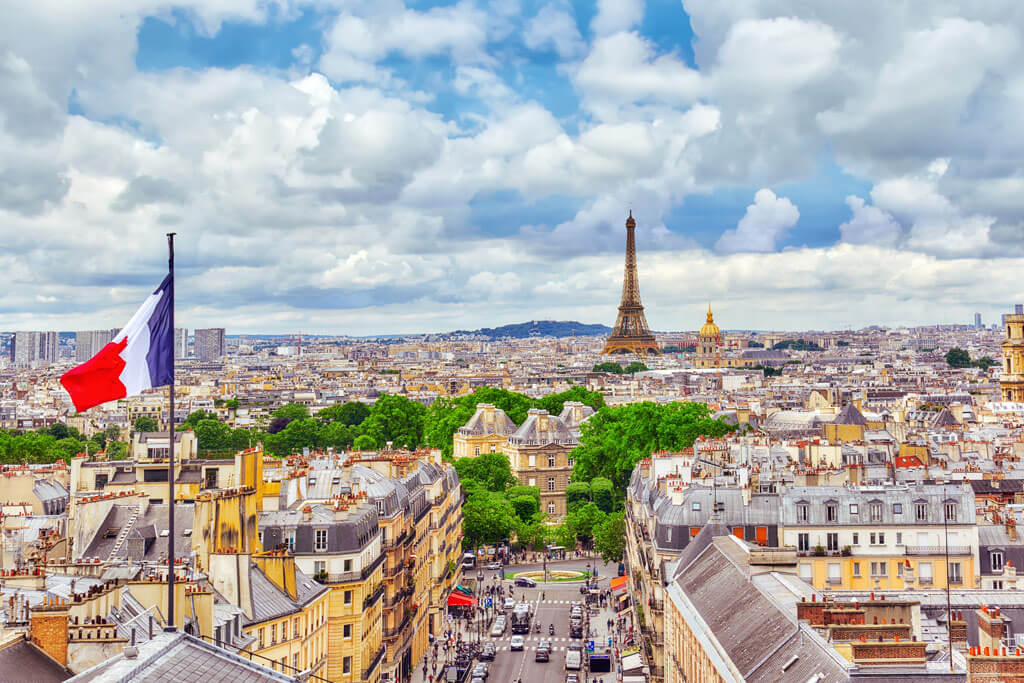
What I’d skip: The Eiffel Tower queue for the summit is genuinely punishing and the view, while good, isn’t the best in Paris. Views from the Arc de Triomphe or Sacré-Cœur give you the same skyline. Moulin Rouge: enjoy the history from the outside. Musée Grévin (the wax museum): life is short.
The Neighborhoods Worth Your Time
Le Marais: My home base and still my favorite. Jewish bakeries on Rue des Rosiers, contemporary art galleries in the 3rd, Place des Vosges, the Sunday secondhand market at Paul Bert — it has everything.
Canal Saint-Martin (10th): The Paris that young Parisians actually live in. Slow mornings by the canal, excellent coffee shops, bookshops, market at Richard-Lenoir on Sundays. This is where I understand why people choose to live here.
Montmartre: Gorgeous in the early morning, exhausting by 11am. The Sacré-Cœur itself I find a bit cold, but the view is undeniably spectacular. Walk the streets behind the tourist crush — Rue Lepic, the vineyard, the little square at the top — and you find something quieter and real.
Saint-Germain-des-Prés: Was the literary heart of Paris; is now quite expensive and somewhat hollowed out. Still beautiful to walk, still has the famous cafés, but feels more like a set than a neighborhood. Worth an afternoon; I wouldn’t base myself here.
On the “Rude Parisians” Question
In seven days I encountered one genuinely rude interaction (a shop assistant who was dismissive when I struggled to explain what I wanted in French) and dozens of warm, helpful, funny ones. My experience of Paris is consistently that if you make any visible effort — learning a few phrases, not barging in without a greeting, treating the waiter like a person rather than a service — people respond with warmth and often generosity.
The etiquette is real: always say bonjour when entering a shop. Always s’il vous plaît and merci. These aren’t formalities — they’re the baseline of how Parisians treat each other, and they notice when you extend the same courtesy.
Practical Notes
Getting around: The Métro is excellent and cheap. A carnet of ten tickets is the most efficient purchase. Walk as much as possible — the city is designed to be walked and your feet will show you things no map will.
When to go: I went in April and September and would recommend both. July is very hot and very crowded. August is when Parisians leave and the city becomes slightly uncanny. December has its charms but you’ll be fighting crowds everywhere.
Budget: Paris has become expensive. Dinner at a good bistrot will run €35–50/head with wine. Coffee is €3–5. The Métro is cheap, museums are reasonable (and free on the first Sunday of each month). Budget €150–200/day to eat and drink well.
The Honest Summary
Paris rewards patience and punishes rushing. It is not the city it is in films — it is messier, louder, more contradictory, more alive. It has been changed by overtourism in ways that are real and ongoing. And it is still, stubbornly, one of the most extraordinary places on earth to spend a week.
Arrive with lower expectations and higher curiosity than you think you need. Eat more than you planned. Walk until your feet hurt. Sit somewhere quiet in the late afternoon and watch the light.
The city will meet you where you are.
Article by Just a Lion · April 2025